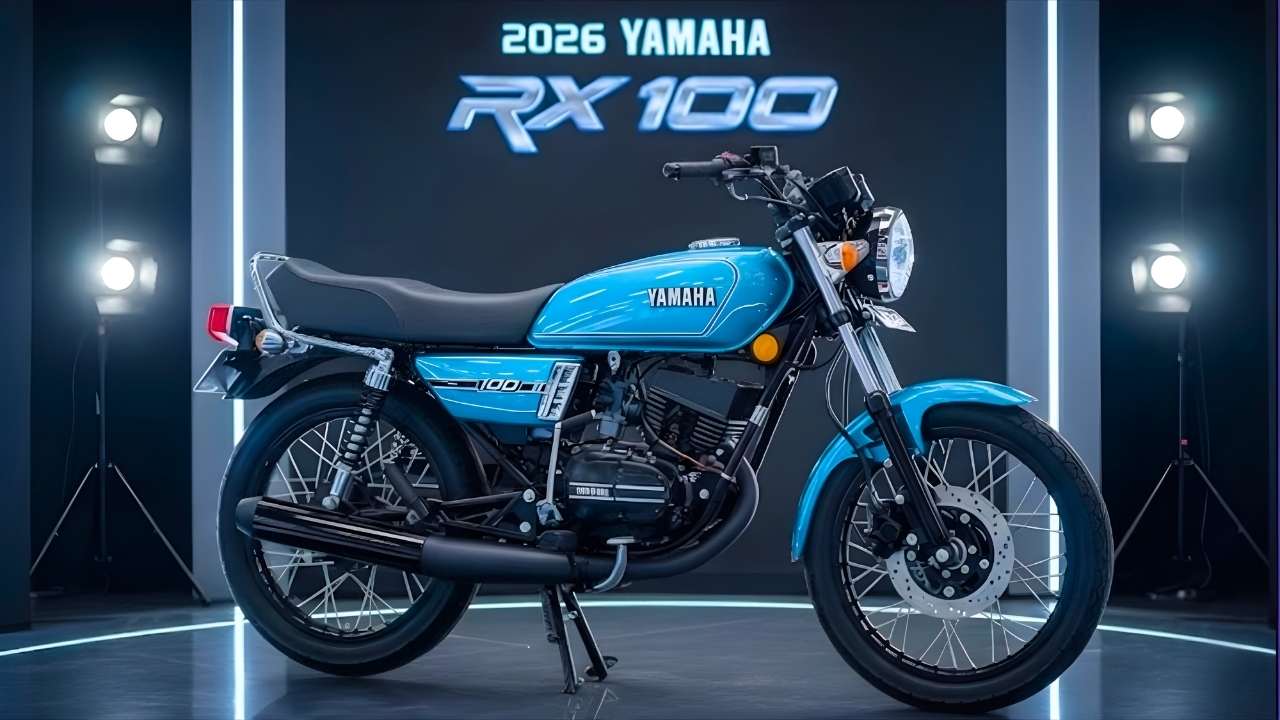
Yamaha RX100 2026: The Yamaha RX100 holds a legendary place in India’s motorcycle history. Known for its lightweight design and quick acceleration, it remains a dream bike for many enthusiasts even decades after production stopped.
Recently, rumors about its revival have created massive excitement. However, many claims circulating online are exaggerated or unverified. This article presents a clear, fact-based overview of the expected Yamaha RX100 comeback, including realistic specifications, features, and market expectations.
Yamaha RX100 Revival News and Launch Expectations
Yamaha has officially hinted at bringing back the RX100 nameplate. However, the company has not revealed final specifications or confirmed a launch timeline yet. Industry reports suggest a possible arrival around 2026 or 2027, depending on development and regulatory approvals.
The delay is mainly due to emission norms and engineering challenges. The original RX100 used a two-stroke engine, which cannot return under current BS6 regulations. Yamaha is working on a modern alternative that preserves the bike’s legacy while meeting environmental standards.

Expected Engine Specifications and Performance Details
The upcoming RX100 is expected to feature a smaller four-stroke engine. Most reliable reports indicate a displacement between 110cc and 125cc, designed for efficiency and compliance rather than raw performance like the original two-stroke model.
Power output is likely to range between 10 to 12 PS, paired with a five-speed gearbox. While it may not match the aggressive punch of the original RX100, the new model will focus on smooth performance, reliability, and everyday usability.
| Engine | 110cc–125cc, 4-stroke |
| Power | 10–12 PS |
| Gearbox | 5-speed |
| Mileage | 50–65 kmpl |
| Fuel System | Fuel Injection |
| Brakes | Front Disc, Rear Drum/Disc |
| Suspension | Telescopic + Twin Shock |
| Weight | 115–120 kg |
| Price | ₹1–1.5 lakh |
| Launch | 2026–2027 (expected) |
Mileage Claims Versus Realistic Fuel Efficiency
One of the biggest viral claims about the RX100 revival is a mileage figure of 72 kmpl or even higher. These numbers have gained attention online but lack official confirmation from Yamaha or credible automotive sources.

Realistically, the bike is expected to deliver mileage between 50 and 65 kmpl. This estimate aligns with modern commuter motorcycles in the same segment. The original RX100 offered around 40 to 55 kmpl, making the new version more efficient but not dramatically higher.
Design Philosophy and Retro Styling Elements
Yamaha is expected to retain the iconic retro design of the RX100. This includes a round headlamp, flat seat, and simple fuel tank styling. These elements are crucial in maintaining the nostalgic appeal that made the original model so popular.
At the same time, modern touches will likely be added to meet current market expectations. These may include LED lighting and improved build quality, ensuring that the bike appeals to both older fans and younger riders looking for a stylish commuter.

Modern Features and Technology Integration
The new RX100 is expected to feature updated technology while keeping things simple. A semi-digital instrument cluster could replace the traditional analog setup, providing essential information in a modern format without losing the classic feel.
Fuel injection technology will likely be standard, improving fuel efficiency and emissions. Additional features such as better suspension systems and improved braking components will enhance ride comfort and safety compared to the original version.
Braking System and Suspension Setup Improvements
Safety standards have improved significantly since the original RX100 era. The revived model is expected to include a front disc brake as standard, offering better stopping power and control in various riding conditions.

The suspension setup will likely consist of telescopic forks at the front and twin shock absorbers at the rear. This configuration ensures a comfortable ride on Indian roads while maintaining the classic riding dynamics associated with the RX100.
Expected Pricing and Market Positioning in India
The new Yamaha RX100 is expected to be priced between ₹1 lakh and ₹1.5 lakh. This pricing places it in the competitive commuter segment, where it will face rivals offering similar performance and features.
Yamaha may position the RX100 as a premium retro commuter rather than a budget bike. The focus will be on brand value, nostalgic appeal, and design, rather than aggressive pricing alone.

Differences Between Old RX100 and New Model
The original RX100 was powered by a two-stroke engine, known for its sharp acceleration and distinct exhaust sound. In contrast, the new version will use a four-stroke engine, prioritizing efficiency and compliance with emission norms.
While the old model focused on raw performance, the new RX100 will emphasize practicality and daily usability. It will also include modern features, better safety components, and improved reliability, making it suitable for current riding conditions.
Challenges Yamaha Faces in RX100 Comeback
Recreating the magic of the original RX100 is a significant challenge. The emotional connection riders have with the old model makes expectations very high, and meeting those expectations with modern constraints is not easy.
Emission regulations, cost considerations, and changing consumer preferences all play a role. Yamaha must balance nostalgia with practicality, ensuring the new bike delivers a satisfying experience without compromising on compliance or affordability.
Final Expectations and Reality Check for Buyers
Many viral claims about the RX100 revival, such as a 200cc engine or extremely high mileage figures, are not realistic. Buyers should rely on verified information and avoid misleading online content.
The most likely outcome is a stylish, fuel-efficient commuter with retro design elements. While it may not replicate the exact feel of the original RX100, it aims to carry forward its legacy in a modern and practical form.